- Aug 16
Bringing a Digital Lens to Cultural Competency
- Lanise Block
- 0 comments
Cultural Competency training does essential work: case studies, discussion, self-reflection, moving educators toward deeper cultural awareness across the topics Minnesota requires. Culturally responsive practice runs through the entire Digital Kinship™ Certificate in Liberation-Centered Digital Pedagogy it's the foundation the whole program is built on, not a single piece of it. When we built the dedicated lessons covering Minnesota's eight required Cultural Competency subtopics, we wanted to add something specific to that work: a digital layer, sitting alongside the reflection and discussion, that lets teachers see these concepts show up in real time, in tools they already use.
What we found
Early in building this section, we ran a simple test. We asked a personal AI assistant one with months of conversation history to help plan a lesson on the Tulsa Race Massacre. Then we asked the exact same question to a fresh, logged-out version of the same tool, with no history at all.
The teaching content barely changed. Both versions landed on nearly identical pedagogical moves center Greenwood's prosperity before its destruction, use precise language, lean on primary sources, protect students from graphic content without erasing the truth.
But the personalized version did something the fresh one didn't. It closed with a line addressed directly to us, referencing "the intersection of culture, agency, and technology" professional language we use to describe our own work, handed back to us by a tool that had learned it over time.
That's not a smarter model. That's months of history talking. And it opened up a question worth sitting with: if that kind of tailored response takes months of use to earn, who has had the time and access to build it —and who hasn't?
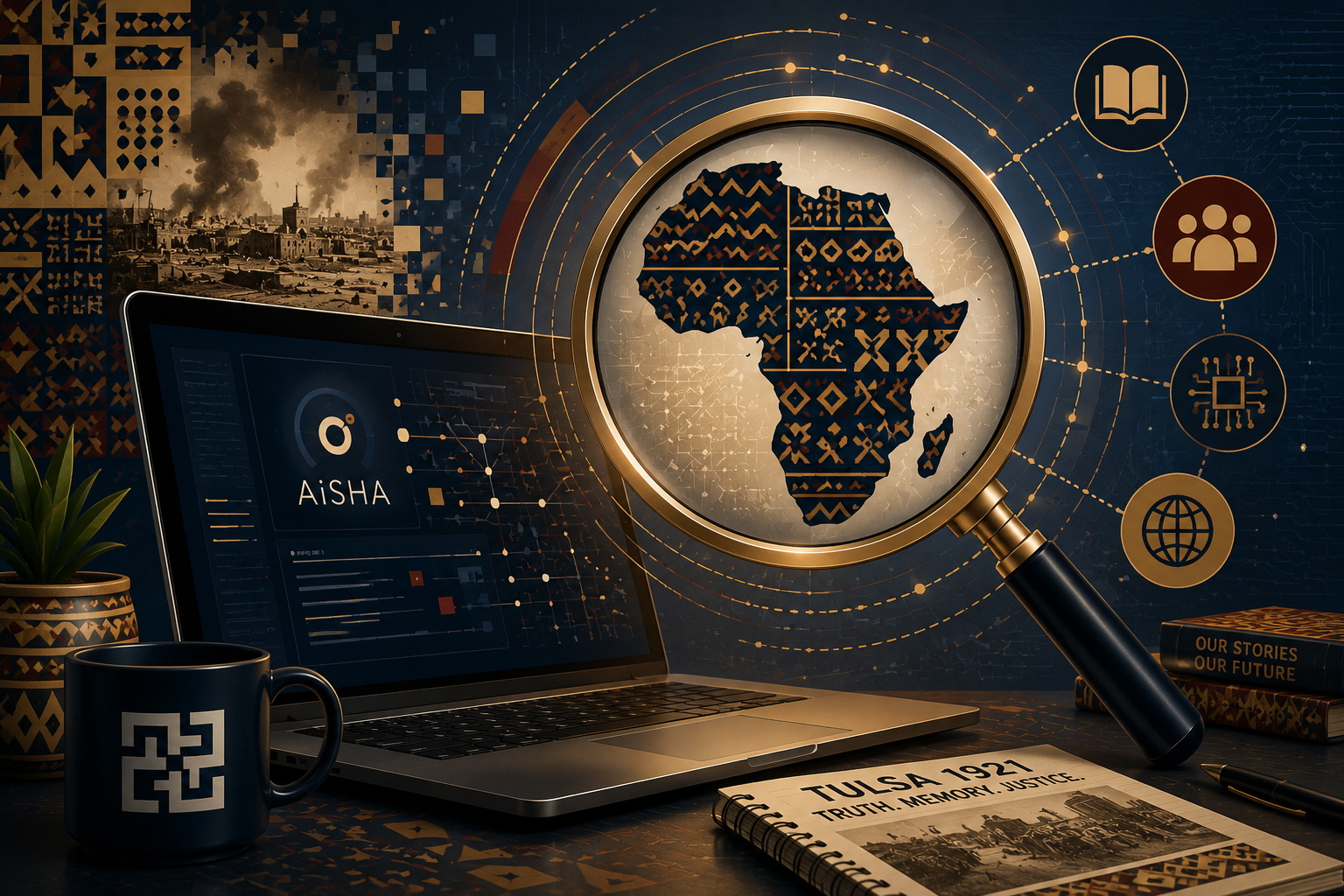
Neutral is a design choice
We ran a second comparison, this time across three different AI tools, using a question about supporting Black students' confidence in classroom discussion.
We used AiSHA a Black-centered AI assistant built by Onyx Impact in direct response to documented bias in mainstream AI tools including AI image generators that have defaulted to lighter skin tones for "CEO" and darker skin tones for "criminal," and hiring algorithms shown to reject Black applicants at disproportionately high rates.
We compared it against ChatGPT and Gemini, using fresh sessions for all three so personalization wouldn't skew the results.
The differences weren't subtle. What got included, what got quietly left out, how warm or clinical the tone was — three tools, one prompt, three different answers. "Neutral" AI isn't neutral. It's just a default, and defaults are choices someone made, whether or not they meant to.
What a digital layer adds
This is what a digital lens brings to work that's already strong: a way to make bias visible in real time, using tools teachers already open every day. It gives educators something to point to that isn't hypothetical — their own screen, their own results, right in front of them.
That's a natural complement to the deeper self-reflection and discussion Cultural Competency training is built around: not a replacement for that work, but one more way in.
Built alongside a second requirement, not instead of it
These dedicated lessons sit inside a larger certificate that also addresses Minnesota's Accommodating, Modifying, and Adapting Curricula requirement through its own dedicated lessons using the same throughline. There, the question shifts from bias to access: when does an AI tool remove a genuine barrier for a student, and when does it quietly do the thinking a student is fully capable of doing themselves? Two different requirements, one consistent lens: look closely at the technology already in the room, and ask what it's actually doing.
Technology alone does not transform teaching. Culture does. Connection does. Kinship does. This certificate doesn't ask teachers to set the technology aside to get to that work it asks them to look directly at it, and see what it's been quietly teaching all along.
The Digital Kinship™ Certificate in Liberation-Centered Digital Pedagogy is a self-paced certificate for educators, including dedicated lessons aligned to Minnesota's Cultural Competency and Accommodating, Modifying, Adapting Curricula relicensure requirements. Learn more at lifted.consulting/liftedshop.